Various Artists
Léve Léve - Sao Tomé & Principe sounds 70s-80s Vol. 2
Bongo Joe
Review by Bruce Miller

For an overview of the what, the why, and the where of this music, do read my review of Volume 1 of this series. Essentially, this collection is more of what made Volume 1 so infectious. Yet, what makes this music so fascinating in general, that is, beyond its unswerving ability to fill dance floors, is the fact that these two islands, part of the Paises Africanos de Lingua Oficial Portuguesa (PALOP) regions of the world, are the second smallest African country; Seychelles is smaller. There are only 12 villages on Sao Tomé, lots of rain forest and, not surprisingly, lots of rain. I mention this because one could be fooled into thinking, with music like what’s on offer here, there must have been a music scene larger than there actually was. Not that little was happening, but that less got recorded or released than it might have had there been a city such as Lagos or Nairobi with the studios, labels, and pressing plants to better document it all.
The music here, like Volume 1- recorded during Africa’s so-called golden age- is known as Puxa, a complex stew of ingredients from other former African Portuguese colonies mixed with rhythms that, with the help of dancers, can summon spirits or exorcise demons. At least according to some. It’s worth knowing that a 100 years or so ago, the Portuguese banned Puxa dance; it’s also worth knowing they appear to have failed miserably at this silly endeavor. Tucked away in modern Puxa is merengue, Kompas, Soukouss, Benga, and much else. One suspects much of this is coincidental, while other grooves were definitely imported considering both Portuguese rule and the islands’ location over the Atlantic from the Caribbean. But don’t be fooled into thinking these two islands don’t have their own thing, as the sounds on this collection show.
Pedro Lima, who has featured in his own Bongo Joe collection, leads a fiery band, complete with choked guitar vamps tussling with a kit drummer as a lead guitar comments from the sidelines on “Sossegado.” Elsewhere, Sangazuza demonstrates what happens when the bass and keys drop out, leaving the drummers and guitars to ride out a groove and drive dancers mad in the process. Check “Sono sá kuá de téma” or “Mairo bi cedo” for their ability to place a firm finger on the pulse. Over 15 tracks, the collection shows off multiple guitars weaving and circling one another, with lead and harmony vocals constantly in response, becoming part of the songs’ melodic framework. At any given moment, vocals give way as the music unspools and floats on grooves that must have gone on for hours live. Africa Negra’s “Apoiámos a luta dos nossos irmãos” is one example.
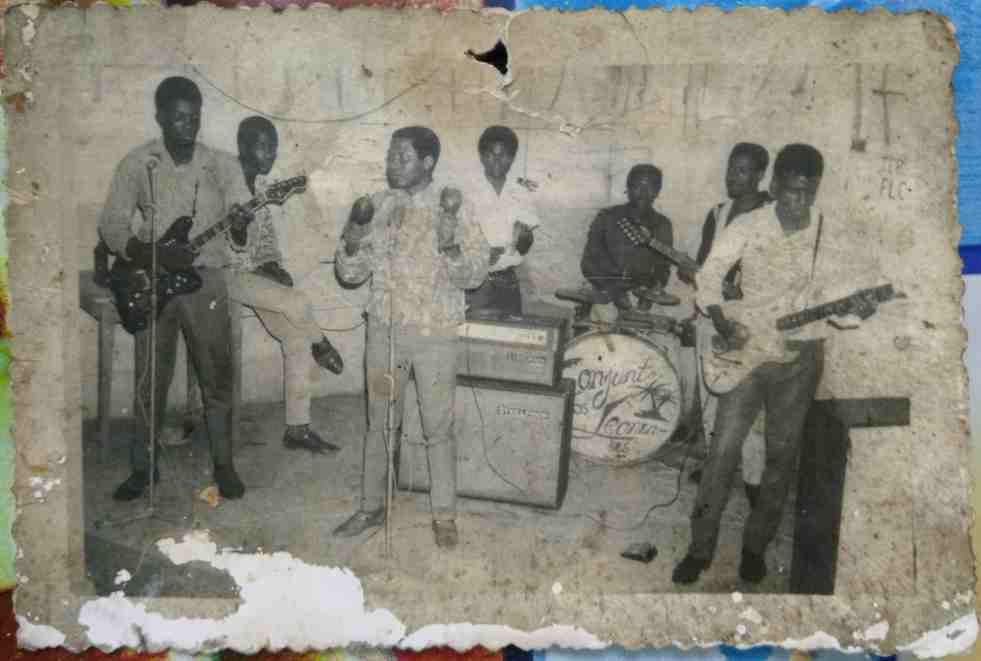
In general, what’s on offer here, like Volume 1, was recorded at Radio Sao Tomé e Principe (RSTP), often taped in the courtyard outside at night, and released on cassette or occasionally, vinyl. It captures the joy of post-1975 independence and only fizzled out as styles changed and musicians struggled to make ends meet. Yet, take a quick listen to recent RSTP programming, which features musicians such as Babilonia or Calema, and you’ll still hear Puxa rhythms, showing just how potent the music form this two-island nation is on a global level. And Bongo Joe, who have also released two volumes featuring the above mentioned Africa Negra, have given this music the treatment it deserves, with extensive notes on the country’s history, vintage photographs, and band discographies.
Various Artists - Léve Léve (Volume1) (Review)
Pedro Lima - Maguidala (Review)
Ann O'aro - Bleu (Review)
Subscribe and Support RootsWorld